Weight Loss Math. Does it Add Up?

Updated: Sep 17
I recently had a consult call with someone who wanted to lose weight. I always ask prospective clients about previous weight loss experiences, whether successful or not. It tells me so much about how to personalize my process to ensure that old roadblocks are avoided and we find a path to success.
Like many people, weight loss had been a lifelong struggle for this potential client, with periods of success followed by gaining the weight back.
As he told me his story, he made a couple of references to the fact that 'the math didn't add up.'
I knew exactly what he meant. He couldn't reduce his calories or increase his exercise enough to lose weight or maintain an initial weight loss.
Understanding Calories In, Calories Out
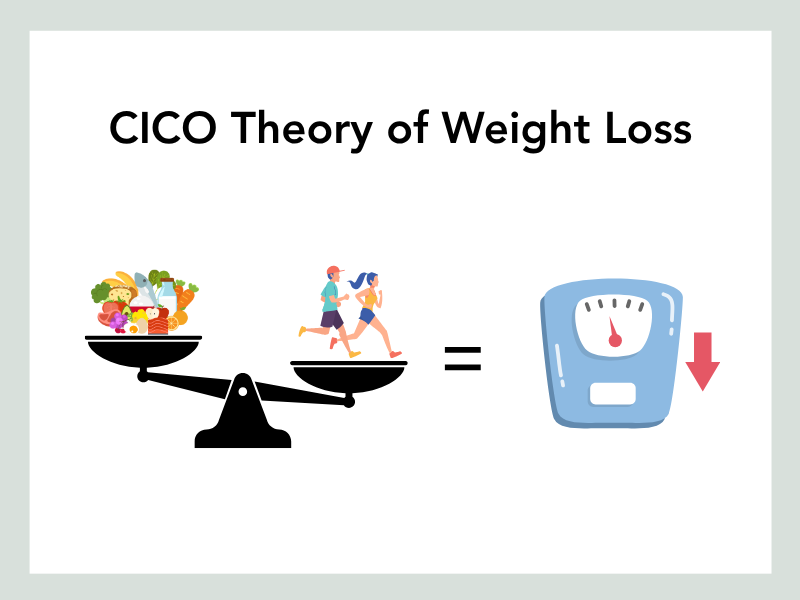
In the weight loss world, we call this the CICO principle; short for calories in, calories out.
It's the idea that people gain weight because there is an imbalance between what they eat (calories in) and what they burn for energy (calories out).
According to this theory, if you burn more than you eat, you will lose weight
Simple, right?
By now, you might be shaking your head and remembering a time when you cut your calories and exercised like mad, only to have an initial weight loss creep back on.
Or maybe you are blaming yourself for not being able to work out hard enough to make the 'math' work.
I see a lot of this shame and blame with clients, and I help them let go of it by explaining the nuances of weight loss that go beyond eating less and moving more.
Does Balancing Calories In, Calories Out Help You Lose Weight?
The problem with viewing weight loss as a simple math problem is that, while you have a decent amount of control over what you eat, you have virtually no control over how much energy you expend.
Why is that, when you can control how much you exercise?
How Dieting Affects Basal Metabolic Rate
There are two important things to understand about what happens to your metabolic rate (calories out) when your eating or exercise habits change.
Exercise is only a small part of calories you burn. The energy you burn to move, including formal exercise but also tossing and turning in bed, walking to the refrigerator, scrolling through your phone, etc., represents only about 30% of your total energy expenditure. The exercise piece of that? Maybe 5%.
The other 70% of calories are burned to keep you alive – breathing, pumping blood, digesting food, making hormones, and all the other things that your body is doing in the background that you don't even notice. This is called your Basal Metabolic Rate.
Your brain controls your metabolic rate. It's not afraid to change it to keep you alive.
When your brain senses a decrease in calories, it sounds an alarm. Warning! Food is scarce. Better conserve energy!
Your basal metabolic rate will drop, offsetting the extra energy you might be burning at the gym. In fact, it will probably slow down the energy you burn to match what you are consuming, even if you are eating less than before.
Some studies have shown that the basal metabolic rate remains suppressed even after a calorie-restricted diet is ended and eating returns to normal, which explains why people often regain more weight than they lost.
I think that this is exactly what was happening for my prospective client. He wasn't wrong that the math wasn't adding up. He just didn't have conscious control over one side of the equation.
How Hormones Affect Weight Loss
So, how is it possible to lose weight and keep it off, as my clients who work with me typically do?
Part of the 'math' that your brain uses to decide whether to store or burn calories is determined by your hormones. Any weight loss program that doesn't take hormones into account is missing an important piece of the puzzle.
There are lots of hormones involved, as described in the post Hormones and Weight Loss, but the most important one is insulin.
One of the functions of insulin is to store excess calories as fat. When your insulin levels are high, it's very hard to burn fat. Insulin is sending the 'store fat' message, no matter how much you exercise. In order to store calories when they are scarce, your basal metabolic rate slows. Learn more about insulin and weight loss in The Weight Loss-Metabolism Connection.
I'm keeping the explanation simple. The human body is incredibly complex, and simplistic solutions for weight loss, like calories in calories out, are no match for our ability to keep our weight stable in order to stay alive during times of famine and times of plenty.
If you've ever been frustrated because the 'math' of weight loss didn't work for you, let's talk. In my free consultation, after a review of your dieting and weight history, I will give you my best assessment of what we would address in my nutrition coaching process, beyond eating less and moving more, to shift the balance in your favor.